Tick Safety Briefing and Field Guide for Utility Crews
by Jody Green, Extension Educator
March 26, 2026
Suggested Crew Leader Safety Briefing:
Ticks are active in Nebraska and are especially common in grassy and brushy areas where crews will be working. While tick populations drop immediately after wildfire, they can recover due to rapid generation of vegetation and the influx of animal hosts. Preventing tick bites is the best protection to protect from various tick-borne illnesses and the risk of alpha-gal syndrome, which is the allergy to red meat (and other mammalian products). Everyone should dress and prepare accordingly to encounter tick-infested areas by using repellents such as DEET, wearing permethrin-treated clothing, and tucking pants into socks and shirts into pants. Perform frequent and thorough tick checks throughout the day. At the end of the day, remove clothing and place in a clothes dryer on high heat for 20 minutes, and shower while checking your entire body. If you find a tick, remove it promptly with pointed tweezers and save it for identification. Watch for symptoms like rash or fever and seek medical care if they occur.
Prevention: What to Do in the Field
| Reasoning
|
Remember: Ticks come from the ground/vegetation, not from trees | |
Removing Ticks Safely
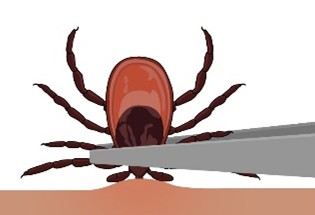
- Grasp tick with pointed tweezers as close to skin as possible (Figure 1)
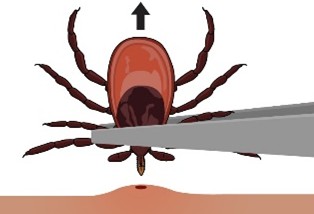
- Pull upward with steady, even pressure (Figure 2)
- Keep tick for identification (contact your local Exension office)
- Clean skin with alcohol or soap and water
| 
|
Tick Images Source: U.S. Centers for Disease Control and Prevention
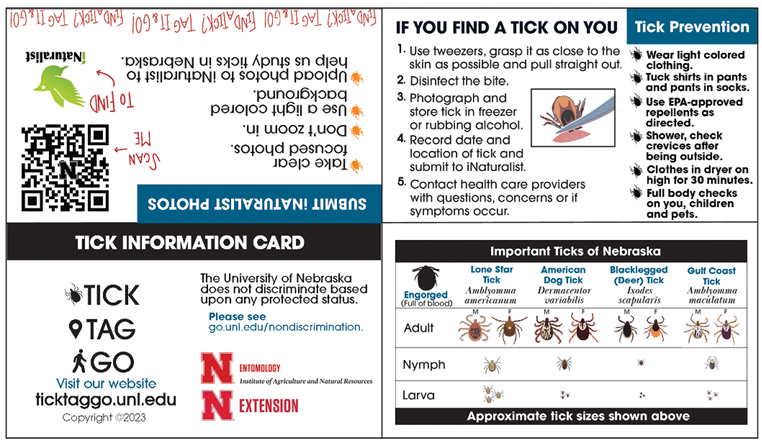
Tick Resources for Nebraskans
Nebraska One Health: https://nebraskaonehealth.unl.edu/one-health-practice/tick-tag-go
More Resources:
Nebraska DHHS Tick and Surveillance map: https://experience.arcgis.com/experience/c6fde5fd914d407aad18c07cc7725d6a/%20
U.S. Centers for Disease Control and Prevention: https://www.cdc.gov/ticks/index.html
Tick Testing
Ticks can be submitted to the University of Nebraska Medical Center for testing, but this is not a medical diagnostic tool. Medical decisions should be based on symptoms and physician guidance.